5 Unexpected Findings in Beauty Retail eCommerce

Beauty Retail eCommerce – What You Will Learn
Beauty is one of the most eCommerce-mature industries – but also one of the most complex to navigate. With dozens of retail platforms to choose from and limited resources to invest in all of them, brands need data to prioritize the right partners and negotiate from a position of strength. This article shares five data-driven findings from a study of the top 32 beauty retailers in Germany.
Key Beauty Retail Trends at a Glance
- Retailer Selection Must Be Strategic – Not Just Brand-Led:
The German beauty eCommerce landscape is highly fragmented. Amazon still leads, but serious alternatives exist and should be developed into strategic counterweights rather than ignored. - Marketplaces Dominate – 90% of Online Beauty Sales in Germany:
Marketplaces account for the vast majority of online beauty sales. Brands that are not present on the major platforms are leaving significant revenue on the table. - Big Name Retailers Do Not Always Perform Online:
Recognizable offline players like Müller do not always translate their success to eCommerce. Omnichannel presence does not guarantee online conversion – always assess retailers by their actual digital performance. - Perfumeries Offer Relevance but Limited Reach:
Outside of Douglas, perfumeries in Germany attract relatively low traffic volumes. Brands should be selective about which perfumeries they invest in and watch for consolidation in this space. - International Retailers Struggle to Gain Traction in Germany:
Global players that perform well elsewhere, like Sephora, have not found it easy to compete with local retailers like Douglas or DM in Germany. Always benchmark retailers market by market before investing.
Beauty Retail eCommerce- What You Will Learn
As part of the beauty retail industry, selling through online commerce is inevitable. In fact, beauty is one of the most advanced industries when it comes to eCommerce maturity.
However, as beauty brands have a wide selection of retail platforms to choose from, eCommerce strategy can be quite complex to develop. Why is this?
- There are many platforms to choose from but few resources available to launch on all of them successfully.
- It is often difficult to then prioritize among these retailers to know which option would deliver the most value.
- Brands need to be better informed in order to better negotiate and get into joint business planning with retail partners.
Using Data to Negotiate with Power
There is an informational void and brands can often feel disempowered. Data offers the best solution for such brands. Understanding the landscape through the lens of data science can not only help brands prioritize retailers but also negotiate from a position of strength.
5 Insights to Know for Negotiations in 2024
If you’re an eCom professional in beauty retail in Germany, here are 5 insights that can help drive your trade term negotiations in 2024.
If you’re interested in finding out more about specific retailers, let us know and we can create a custom study.
For now, here are findings based on the top 32 beauty retailers!
Retailer Selection Needs to be Strategic
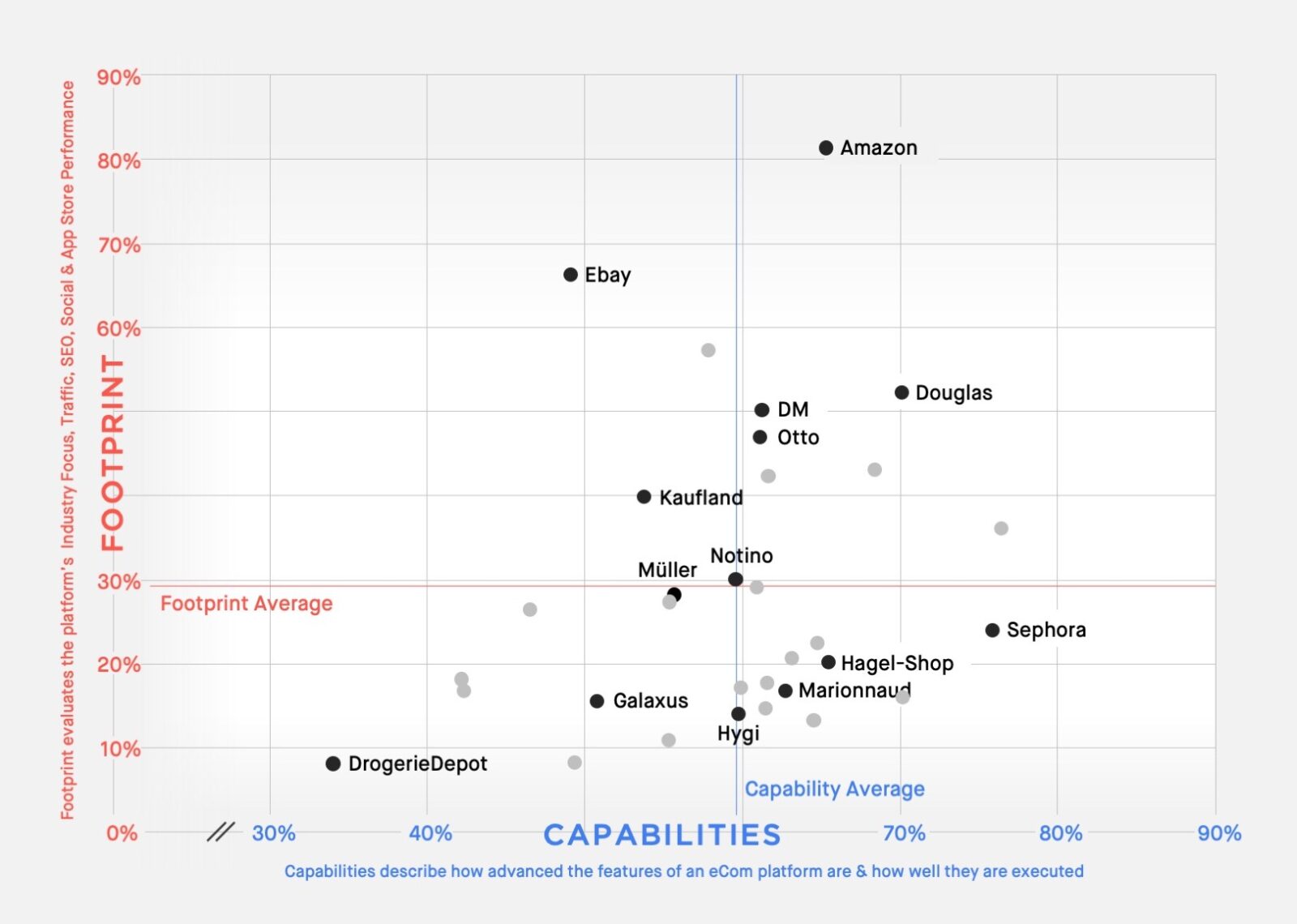
The German eCommerce landscape for beauty retail is highly fragmented. There is a wide variety of players and each comes with their own strengths and challenges. It is not enough to invest in big names such as Amazon.
Though Amazon still dominates the market, there are now serious alternatives that can and should be leveraged. Hence, identifying these partners and developing them into strategic counterweights should be a priority.
Beauty Retail Brands Cannot Ignore Marketplaces
In our study, we define a marketplace as a platform that only matches buyers & sellers without owning the product. From this point of view, it may be surprising to know that Marketplaces offer great potential for beauty retail in Germany.
For instance, Marketplaces are accountable for 90% of online beauty sales in Germany. Furthermore, their large footprints along with advanced capabilities create conversion-friendly opportunities.
To win in eCom in Germany, brands need to be present in the major marketplaces. This does not necessarily mean having in-house, burdensome logistics processes. You can also outsource these functions to specialized service providers or clients.
Do you want to stay up-to-date in Digital Marketing?
Beware of Overreliance on Big Name Retailers
When it comes to the beauty of eCommerce, tenure, and recognizability do not equate to success. Players such as Müller who entered eCom early do not necessarily have the most dominant position in the market.
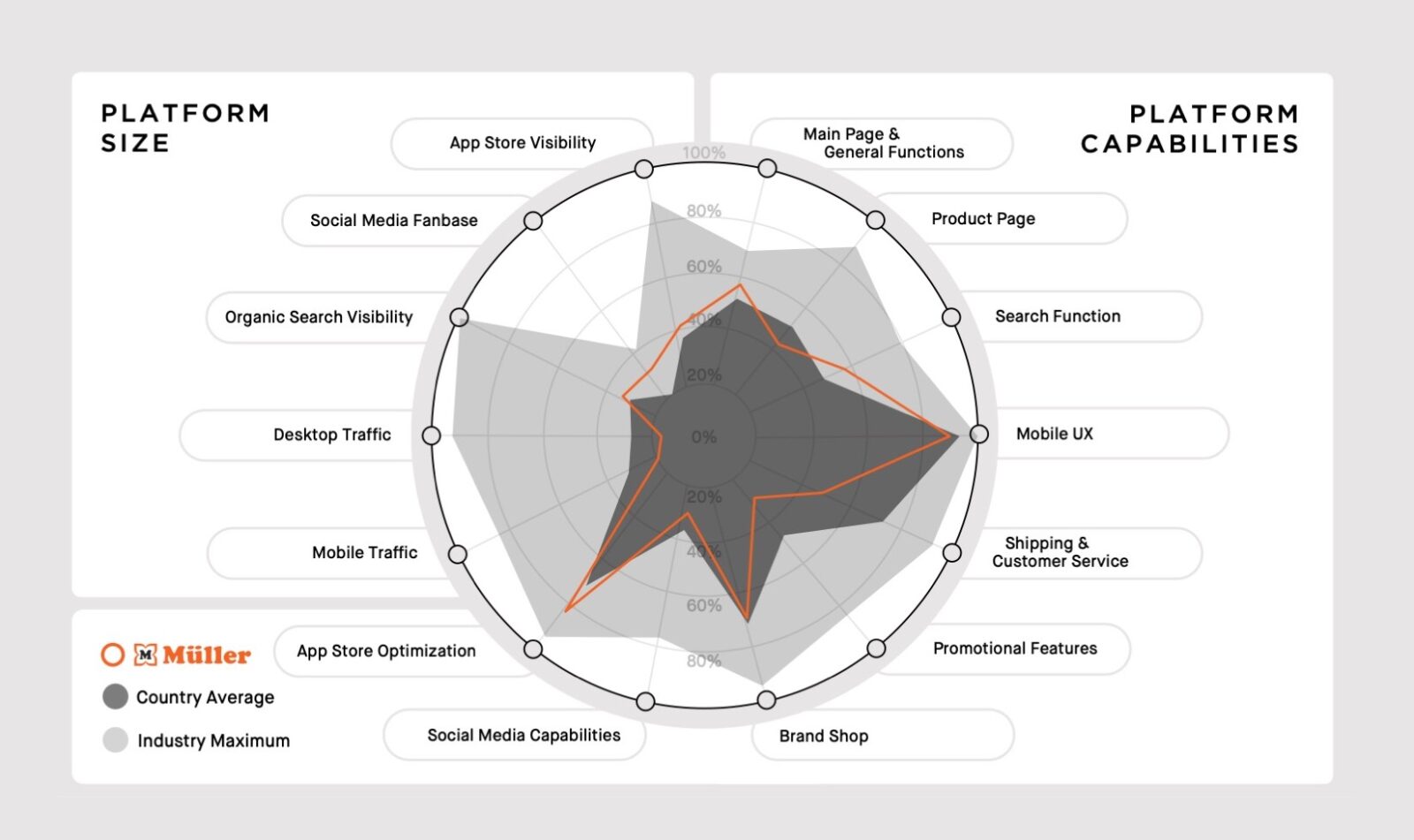
Remember that omnichannel players who can guarantee success offline are not always equally capable of converting online. How should you mitigate this? Download the full report to find out.
Perfumeries offer You Relevance but not Reach
Beauty brands tend to focus on beauty retailers and perfumeries when it comes to their eCommerce strategy. In principle, it makes sense to go after big players such as Amazon in addition to niche players such as perfumeries. However, selecting the right mix under each category is still key to success.
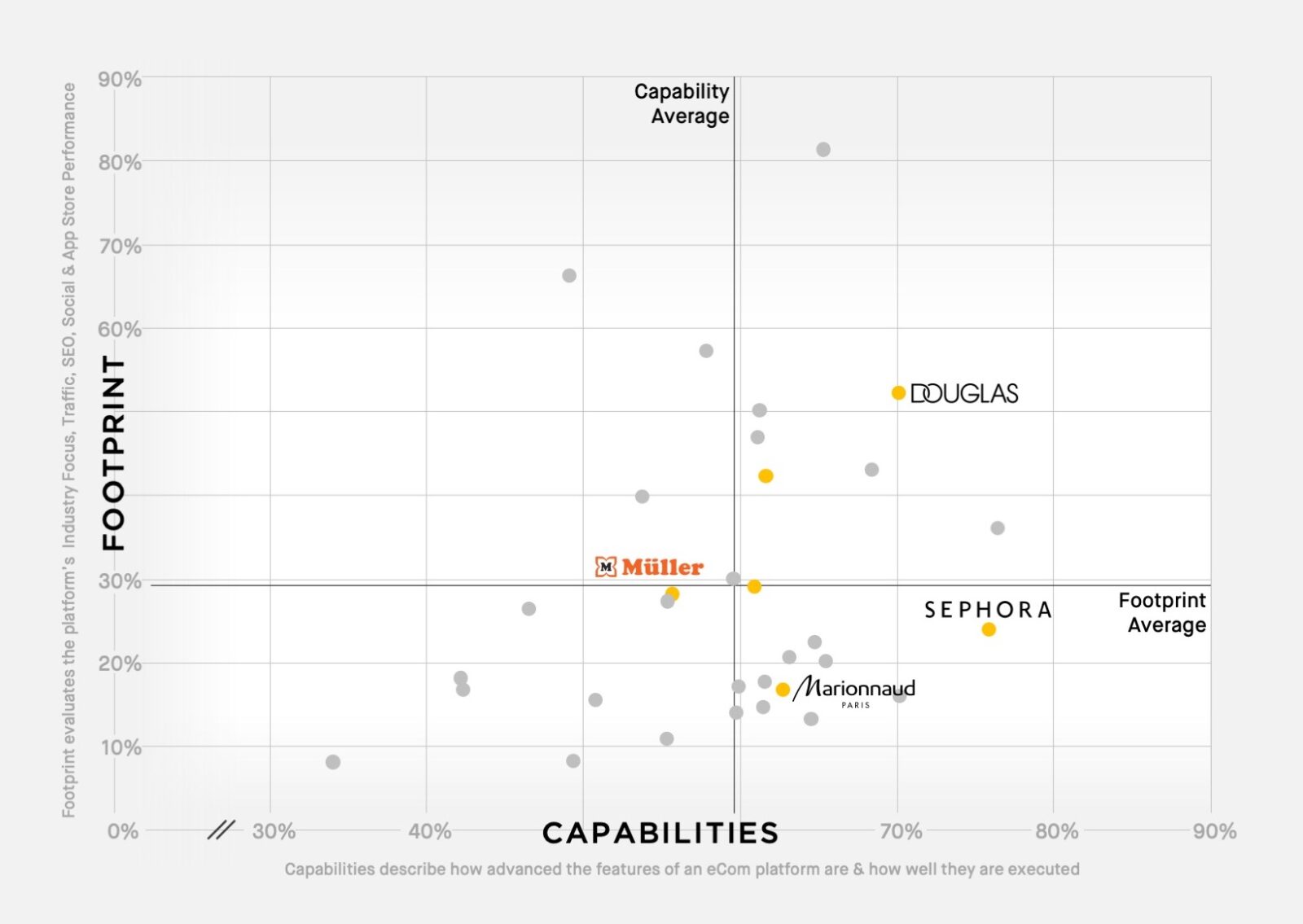
In Germany, other than Douglas, perfumeries are yet to be able to attract large volumes in terms of traffic. The wide gap also leaves room for consolidation which is something to watch out for over the course of 2024!
Be Strategic with Your Investments in International Beauty Retailers
International retailers who are successful in other parts of the world have not found it easy to gain traction in Germany. Based on their footprint or reach, they seem to be struggling to catch up with local retailers such as Douglas or DM.
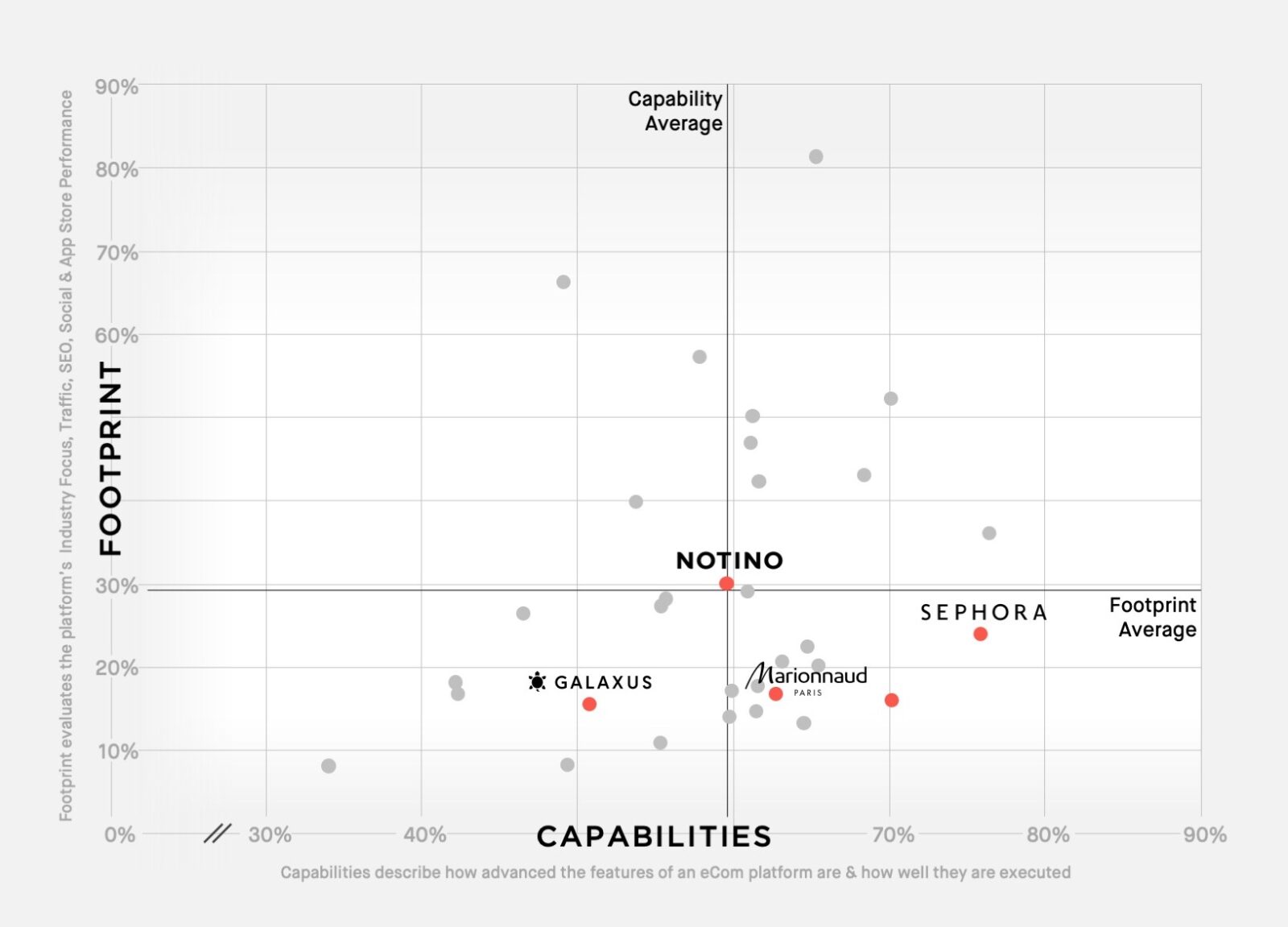
For beauty brands, this means that investing in a player like Sephora in the US may not drive the same results for you in Germany. To assess the true potential of each retailer, it is best to competitively benchmark them in the specific market in which you want to make your investments.
Continue Leveraging Data to Enhance Ecommerce Beauty Retail Negotiations
If you’re interested in digging deeper:
Want to benchmark your own retailers against the beauty landscape, talk to us to order a custom report.
FAQ: Beauty Retail eCommerce in Germany
Which online retailers should beauty brands prioritize in Germany?
Why do some well-known beauty retailers underperform online?
Are perfumeries worth investing in for beauty e-Commerce in Germany?
Should beauty brands invest in international retailers like Sephora in Germany?
How can beauty brands negotiate better trade terms with retail partners?
How should beauty brands decide which retailers to work with?
This article was written by Diamanta Hykaj and Alexandra Akaoui, digital marketing analysts with strong experience in digital marketing, e-commerce, and the beauty industry. Their work focuses on consumer behavior, omnichannel retail strategies, digital transformation, customer engagement, and emerging trends shaping the future of beauty retail. Through their expertise in data-driven marketing and digital commerce, they help brands better understand evolving customer expectations and build stronger online and in-store experiences.