The Difference Between GEO and SEO: What you need to know in 2026

GEO vs SEO – What You Will Learn
Search has evolved. It is no longer just blue links. Today, users get answers from AI summaries, voice assistants, and generative engines. That’s where AEO (Answer Engine Optimization) and GEO (Generative Engine Optimization) come in. These terms are not buzzword replacements for SEO. They’re the new layers you stack on top to dominate wherever users discover your brand, namely ChatGPT, Perplexity or Gemini. AI platforms are expected to drive more traffic than traditional search engines by 2028.
If you are trying to understand the difference between GEO and SEO, this in-depth guide will walk you through how each works, where AEO fits in, and how to combine all three for maximum visibility.
Key Takeaways – GEO, SEO, and AEO in 2026
- SEO Is Still Essential – But It Is No Longer Enough on Its Own:
SEO remains one of the strongest drivers of high-intent traffic, especially for eCommerce. But with AI summaries resolving more queries without a click, SEO alone no longer covers the full discovery landscape. - AEO Gets Your Content Featured as the Instant Answer:
Answer Engine Optimization structures your content so it gets pulled into featured snippets, voice responses, and AI overviews – building brand visibility even when users never visit your site. - GEO Makes Your Brand a Source AI Systems Trust and Cite:
Generative Engine Optimization positions your content as authoritative enough for AI tools like ChatGPT and Gemini to reference when generating answers. It is less about keywords and more about credibility, clarity, and data-backed insights. - The Winning Strategy Combines All Three:
SEO gets your content indexed and ranked. AEO gets it featured in zero-click environments. GEO gets it cited by AI. Together, they form a complete visibility strategy for 2026 and beyond.
Why SEO Alone is not Enough
SEO (Search Engine Optimization) is your foundation. SEO gets your pages ranking in Google or Bing SERPs, driving clicks to your website. It comprises keyword research, page optimization, technical fixes and authority building.
In 2026, SEO continues to be one of the strongest drivers of high-intent traffic, especially for ecommerce and lead generation. However, the SEO landscape has changed. With the rise of AI-generated answers and search features that resolve queries instantly, fewer users are clicking on links for informational searches. That means while SEO still delivers conversions, its role as the sole traffic engine is shrinking.
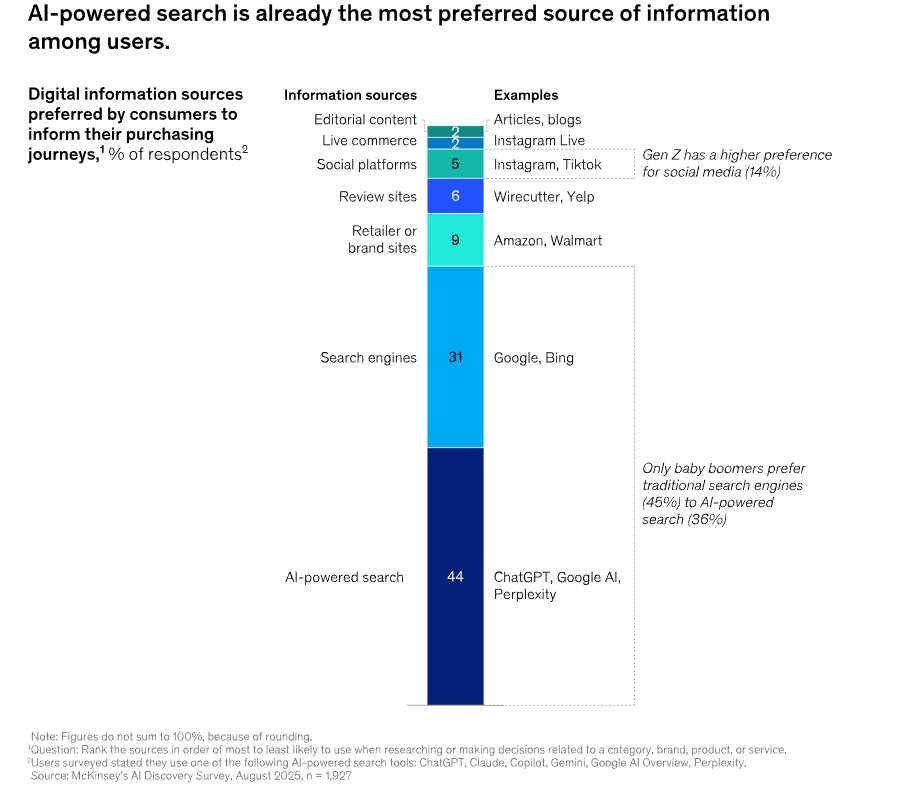
Customer preferences are now shifting: AI-powered search is becoming the most preferred source of information.
Source: McKinsey & Company
AEO: Steal the Spotlight Answer
This is where AEO, or Answer Engine Optimization, comes into play. AEO shifts the focus from earning clicks to becoming the answer itself. Instead of trying to bring users onto your site, you structure your content so that search engines and AI systems can extract and display it directly in results. This includes featured snippets, “People Also Ask” boxes, voice assistant responses, and AI-generated overviews.
The goal is to provide clear, concise, and structured answers that can be easily pulled into these formats. In practice, this means writing in a more direct style, answering questions early in your content, and organizing information in a way that machines can interpret quickly. AEO is particularly powerful for building brand visibility in a zero-click environment, where users may never visit your site but still see and trust your content.
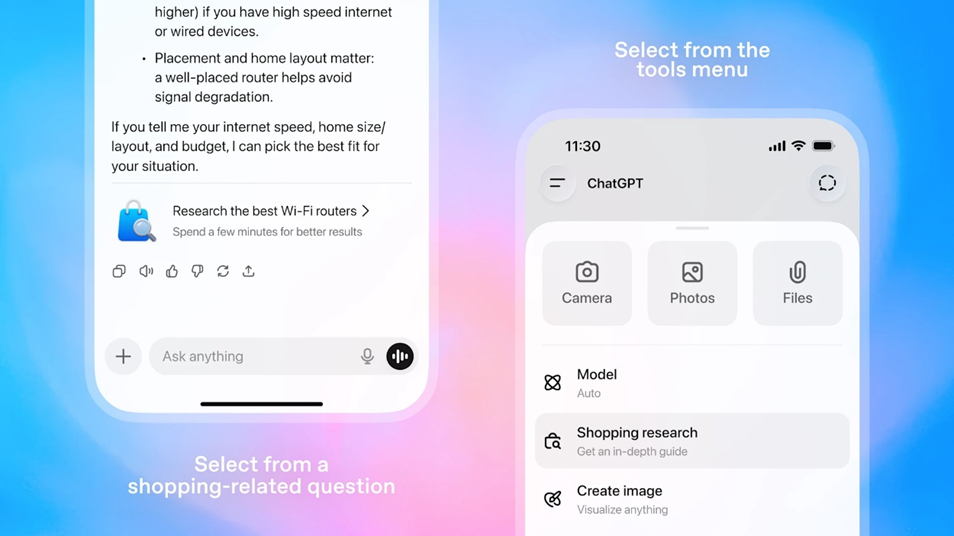
Shopping Assistants are also slowly being introduced to AI powered search engines such as ChatGPT. Source: OpenAI.com
The difference between GEO and SEO
GEO, or Generative Engine Optimization, is focused on how your content performs inside AI tools like ChatGPT, Perplexity, Google Gemini, and Microsoft Copilot. Unlike SEO, which aims to rank pages, GEO aims to make your content a trusted source that AI systems choose to reference when generating answers. This is a fundamental shift. Instead of competing for position on a results page, you’re competing to be included in the knowledge that AI presents to users.
GEO works because modern AI systems prioritize content that demonstrates authority, clarity, and originality. They are far less interested in keyword density and far more interested in whether your content provides real value, unique insights, and credible information. Content that performs well in GEO tends to include data-backed claims, thoughtful analysis, expert perspectives, and a clear structure that makes it easy to parse. When successful, GEO does not just bring traffic, but it also builds authority, as your content becomes part of the answers users repeatedly see across AI platforms.
Here is a breakdown of some of the key differences between SEO, GEO and AEO:
| SEO | GEO | |
| Goal | Optimize for traditional search rankings, drive clicks to your website | Earn AI Citations |
| Platform | SERPs | AI Powered Search Engines |
| Metrics | Traffic, CTR, Rankings | AI Mentions, Citation Rate |
| Optimization Focus | Keywords, Backlinks, Domain Authority | Credibility, Citeability |
A table explaining the key differences between SEO and GEO. Source: Watersky Digital
AEO sits somewhere in between these two. It still operates within search engines, but like GEO, it focuses on delivering answers directly rather than driving clicks. You can think of SEO as the mechanism that gets your content discovered, AEO as the layer that gets your content featured in immediate answers, and GEO as the strategy that positions your content as a trusted authority within AI-generated responses.
SEO or GEO: where should I focus on?

Using all available search tools in a complementary way is essential in future-proofing your brand. Photo by Sasun Bughdaryan on Unsplash
In practice, the most effective approach in 2026 is not to choose between SEO, AEO, and GEO, but to integrate all three. A strong SEO foundation ensures that your content is indexed, accessible, and competitive in traditional search. Layering AEO on top allows you to capture visibility in zero-click environments by making your content easily extractable. And finally, GEO takes it a step further by ensuring that your content is authoritative and valuable enough to be cited by AI systems. These three tools should complement each other.
So, what can we expect in the future? The trajectory is clear. We are evolving towards a world in which answers are primary, and clicks are secondary. The visibility of your content will be determined by the ability of your content to be understood and consumed by AI systems. In such a world, SEO plays an important role, but it’s not the entire game.
Bottom Line: Future-Proof Your Search Strategy
Ultimately, the difference between GEO and SEO comes down to this: SEO is about driving traffic to your website, while GEO is about embedding your authority within the answers users receive. AEO complements by helping your content surface as immediate answers in search environments. Together, they form a complete strategy for modern discovery.
The brands that succeed in 2026 and beyond won’t just rank; they’ll be referenced, quoted, and used across all platforms where users seek information. If your current strategy isn’t yet accounting for this change, it is time to evolve.
Want to know more? Reach out to us to discuss how to improve your search and AI visibility.
GEO vs SEO vs AEO: Frequently Asked Questions
What is the difference between GEO and SEO?
SEO focuses on ranking pages in traditional search engines like Google to drive clicks to your website. GEO (Generative Engine Optimization), focuses on making your content authoritative enough to be cited by AI tools like ChatGPT, Perplexity, and Gemini when they generate answers for users.
What is AEO and how does it differ from GEO and SEO?
AEO stands for Answer Engine Optimization. It sits between SEO and GEO – it still operates within search engines but focuses on getting your content extracted as a direct answer in featured snippets, “People Also Ask” boxes, and AI overviews rather than driving clicks.
Do brands still need SEO in 2026?
Yes. SEO remains a strong driver of high-intent traffic, especially for eCommerce and lead generation. However, it now needs to work alongside AEO and GEO to cover the full range of environments where users search for information.
Where should brands focus first – SEO, AEO, or GEO?
Start first with a strong SEO foundation – make sure your content is indexed, accessible, and competitive. Then layer AEO by structuring content for direct extraction. Finally, invest in GEO by building authority and citability so AI systems choose to reference your brand in their responses.
This article was written by Mary Sugui, a digital marketing analyst with expertise in SEO, emerging search technologies, and AI-driven digital strategy.
Her work focuses on how search is evolving in the age of generative AI, and how brands can adapt their content strategies to remain visible across both traditional search engines and AI-powered discovery platforms. She specialises in analysing shifts in user behaviour, search algorithms, and digital visibility in an increasingly AI-first landscape.